The White Door
Second MazeAdventure
4.8757.00 Reviews
- Version
- 1.2.6
- Installs
- 100.00K
- Age Rating
- Teen
Screenshots
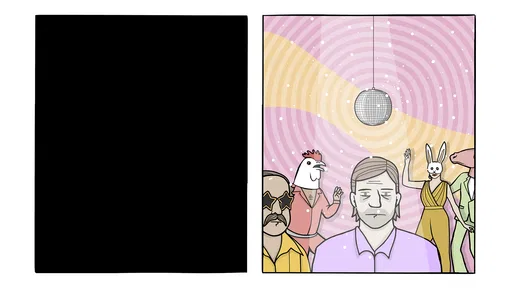
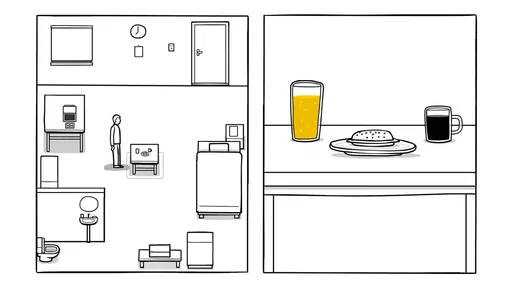
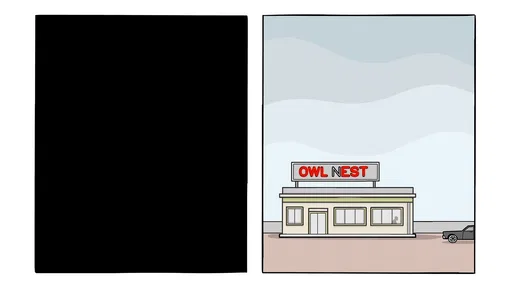
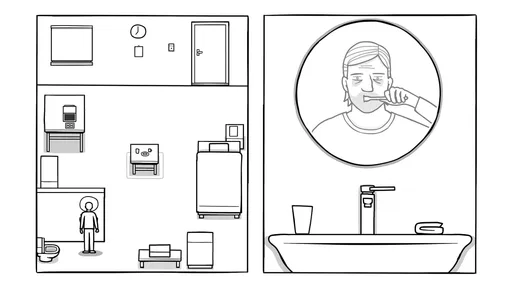
Our Review of The White Door
 Analysis by Appyee
I approached The White Door as a quiet, story-led adventure rather than a game built around speed or constant action. That distinction matters immediately. Created by Second Maze, the team behind the Rusty Lake and Cube Escape games, it places the player in a strange, controlled world where observation, routine, and small details carry more weight than reflexes. I found myself playing it in short, thoughtful sessions, often stopping after a puzzle to consider what I had just seen.
The game costs $3.49, is intended for Teen players, and runs on devices using Android 6.0 or later. It arrived on Jan 8, 2020, and the current version is 1.2.6. Its audience is already substantial, with over 100 thousand installs, a 4.8 average from around 10 thousand ratings, and 757 written reviews. Those numbers suggest a strong reception, but they do not tell you whether its particular style will suit you. In my experience, the real question is less “is it good?” and more “do I enjoy slow, unsettling puzzle adventures that expect me to notice what other games would let me ignore?”
A deliberate adventure built around attention
I found the game’s most distinctive quality in how it makes attention feel like an action: rather than pointing me toward a checklist, it asks me to notice what changes and decide why it matters. That approach suits a player who enjoys forming a theory before trying the next interaction. I’ll look next at how this focused design shapes the moment-to-moment experience, including when its restraint is helpful and when it can leave you wanting clearer direction.
Readability and navigation are part of the experience
The White Door presents its world in a compact, highly controlled way. Instead of giving me a large map to roam through, it focuses my attention on a sequence of spaces, objects, and actions. That narrow framing makes the game easier to understand than an open-ended adventure, because I am rarely wondering where the entire world is. I am usually asking what a particular object means, what a repeated routine is hiding, or why an apparently ordinary detail has been placed in front of me.
I appreciated that structure when I wanted a game I could pick up without remembering a complicated control system. The challenge comes from interpretation and timing rather than from learning a large collection of buttons. Navigation is therefore relatively approachable for players who prefer a focused screen to a busy interface. The game’s strange atmosphere can still make the next step unclear, but that uncertainty is intentional and usually connected to the mystery rather than to a sprawling menu system.
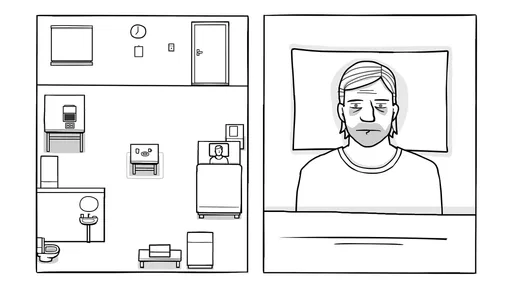
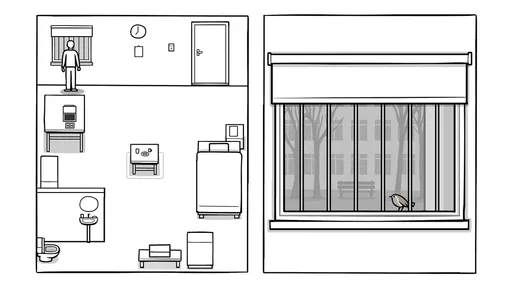
Its visual language also supports careful observation. The limited spaces encourage me to scan the screen instead of rushing through it. I learned to look at the edges of scenes, revisit familiar areas, and treat repeated activities as possible clues. That is one of the less obvious strengths of the design: a routine that first feels like background decoration may become useful once I understand the pattern around it.
There is a trade-off here. Players who need explicit objectives, bright markers, or a constant explanation of what to do next may find the presentation frustrating. The game does not feel designed to remove every ambiguity. I sometimes had to step away and return with a clearer head, because staring harder at the same scene did not necessarily reveal the answer. For me, that made the eventual discovery more satisfying, but it will not feel welcoming to everyone.
How the puzzles reward a slower reading style
I would describe the puzzles as observation exercises with a narrative purpose. They are not simply locks placed between story scenes. Actions, environments, and character behavior work together, so solving something often means understanding the odd logic of the setting. This makes the adventure particularly suitable for players who enjoy taking notes mentally, comparing details, and testing a theory instead of tapping every visible object at random.
A useful habit is to separate what the game shows from what you assume. When I encountered a familiar-looking object, I tried not to decide too quickly that it worked like the same object in real life. The White Door often uses ordinary imagery in an unusual context. That small change in mindset saved me from forcing conventional solutions onto scenes that were asking for a more symbolic reading.
Another practical tip is to pause before repeating an action. If a sequence seems circular, I look for what has changed in the environment, the character’s state, or the order of events. The game’s controlled presentation means that repetition can be meaningful rather than filler. This is a stronger approach than randomly tapping because it turns the puzzle into a process of comparison.
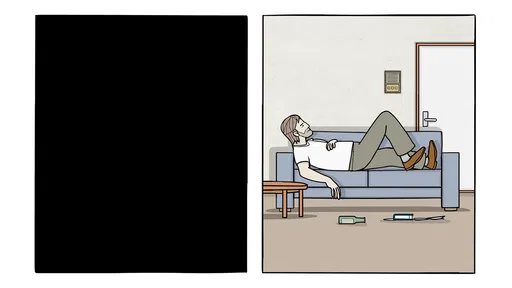
That design also affects readability in a broader sense. The game is visually distinctive, but its mood can make some scenes feel intentionally subdued. Players who are sensitive to visual tension, unsettling imagery, or a bleak atmosphere should be aware that the Teen rating is relevant to the overall tone, not merely a label attached to an otherwise cheerful puzzle game. I would not choose it as a casual distraction for a young child.
Motor demands are modest, but precision is not the whole story
From a motor perspective, this is much less demanding than an action adventure. I did not need fast reactions, complex combinations, or sustained movement across a large virtual space. That makes it a reasonable option for someone who prefers games based on pointing, selecting, and inspecting rather than rapid control. It also works well when I am mentally tired and want a challenge that does not depend on reflexes.
Still, “slow” does not mean effortless. The game expects deliberate interaction with small parts of each scene, and a player may need to repeat an action after understanding a clue. Anyone who finds repeated tapping uncomfortable, has difficulty maintaining a steady grip, or relies on alternative input methods should judge the experience on their own device before committing emotionally to the story. I cannot treat a low-action game as automatically accessible to every motor profile.
The lack of reflex pressure is especially helpful in everyday situations. I could imagine playing during a quiet break, on a sofa with one hand free, or while waiting somewhere that does not allow a long uninterrupted session. A mistake is not the same kind of disaster it would be in a timing-heavy platform game. I can think, stop, and continue without feeling that the game is punishing me for looking away.
On the other hand, the concentrated interaction can become tiring in a different way. Because the game asks me to inspect details, a long session may create visual and mental fatigue even when my hands are comfortable. My best results came from playing in small blocks, especially when I reached a puzzle that depended on remembering an earlier detail. Short sessions were not only easier on my attention; they also helped me notice connections that I had missed while trying to push forward.
Sensory atmosphere and the importance of context
The White Door’s identity depends heavily on mood. Its world feels restrained, unusual, and sometimes uncomfortable, which gives every small action a sense of importance. That atmosphere is a major reason I remember the game, but it is also the part most likely to exclude someone who wants a light, colorful, reassuring adventure. The experience is not neutral background entertainment.
I would be careful about playing it in a noisy environment if I wanted to absorb the story. The game’s impact comes from noticing visual details and following the emotional rhythm of its scenes. A busy commute or a room full of interruptions can turn a carefully built moment into something I merely click through. It remains playable in short bursts, but its narrative is easier to appreciate when I can give it focused attention.
This is where it differs from many casual puzzle alternatives. A typical match-based game can be played while half-watching television, and a conventional hidden-object title may provide a clearer checklist of targets. The White Door asks for a more private kind of concentration. It is closer to reading a peculiar short mystery than filling spare minutes with harmless tapping.
That comparison helps explain who should choose it. If I want a game that respects quiet observation and gives ordinary actions an eerie narrative weight, this is a strong fit. If I need adjustable stimulation, cheerful feedback, or a predictable reward loop, another adventure or puzzle game will probably be kinder to my attention and mood.
Situational access: when it works well in everyday life
I found the game most comfortable when I could control the pace. A realistic example would be an evening when I have twenty minutes before bed and want something more engaging than scrolling but less demanding than a competitive game. I can complete a small section, think about an unresolved clue, and return later without needing to warm up my reflexes. That makes it a good companion for reflective downtime.
It can also suit players who prefer private, self-directed entertainment. There is no need to coordinate with other people, react to a changing opponent, or maintain a daily streak. I can stop when I need to answer a message or switch tasks. The concentrated format is valuable for people whose available playtime arrives in irregular pieces rather than one long session.
However, I would not recommend it as a social game for a group that wants immediate shared excitement. Two people can discuss theories, but the core pleasure comes from one person examining the world and making the connection. It also is not the best choice for someone looking for a game to play while walking, commuting in a crowded space, or dividing attention between several tasks. The controls may be simple, but the clues are easy to miss when concentration is fragmented.
For players with different reading or processing preferences, the focused structure can be both helpful and demanding. There are fewer systems to memorize than in a role-playing adventure, yet the story relies on interpreting what is shown rather than receiving every point in plain language. I found it useful to describe a scene to myself in simple terms: who is present, what changed, and what action has not yet been tested. That method reduces the feeling of being lost without removing the intended mystery.
One of my most useful habits was keeping a tiny note of unusual sequences instead of writing down every object. Recording a broad pattern, such as an order of events or a repeated behavior, is more practical than creating a full inventory. It also preserves the game’s atmosphere because I am still solving the mystery rather than turning the experience into a checklist.
Where the experience still creates barriers
The biggest barrier is not speed; it is ambiguity. The White Door expects patience with scenes that do not immediately explain their purpose. Some players will experience that as elegant storytelling, while others will see it as poor guidance. I had moments when I wanted one clearer indication that I was examining the right part of the environment. If you dislike experimenting without reassurance, the game may feel more obscure than intriguing.
The atmosphere can be another barrier. Its unusual presentation and darker emotional tone are central to the adventure, so choosing it means accepting discomfort as part of the design. Players who are sensitive to unsettling themes should consider whether they want that mood during a particular moment of the day. The Teen content rating is a useful warning that this is not simply a harmless logic toy.
There is also a practical limitation for players who need highly customizable presentation or input options. I would not assume that a minimalist interface automatically provides every adjustment a player might need. Anyone depending on specific accessibility settings should check the game directly on their device before buying, especially if screen readability, touch accuracy, or sensory comfort is a deciding factor.
The price is another point to weigh against personal taste. At $3.49, it is a paid experience rather than a free experiment, so I would be more cautious if you are unsure about story-heavy puzzle games. For me, the purchase makes sense when I already know I enjoy the Rusty Lake style of strange environments and indirect clues. If I mainly want endless replayability, competitive depth, or a large world to explore, I would spend that money elsewhere.
The version available now is 1.2.6, and the minimum operating-system requirement is Android 6.0. Those details make it approachable for a range of older Android devices, but compatibility on paper does not guarantee that every screen size or input setup will feel equally comfortable. I would still pay attention to how the game’s compact scenes appear on the particular phone or tablet I plan to use.
How it compares with familiar adventure alternatives
Compared with a traditional point-and-click adventure, The White Door feels more compressed and more controlled. I am not managing a large inventory or traveling through a broad network of locations in the usual way. That makes it easier to start and less intimidating, but it also means there is less freedom to wander. The game’s unusual structure replaces the satisfaction of exploring a big map with the satisfaction of understanding a carefully arranged sequence.
Against casual puzzle games, it offers a much stronger sense of place and narrative continuity. A match-three title may be better for short, distracted sessions, while a hidden-object game may be more accommodating when I want explicit targets. This adventure is better when I want each interaction to contribute to a strange story. Its puzzles are not interchangeable exercises; they are part of how the world communicates.
It also differs from action-oriented adventure games in a way that may appeal to players with limited energy or slower response preferences. There is no need to chase a timer or master rapid movement. Yet the absence of reflexes does not make it passive. The game asks for sustained attention, memory, and willingness to reinterpret what I see. Someone who cannot comfortably play action games may enjoy this structure, but someone who struggles with visual inference may find it more demanding than expected.
The connection to the Rusty Lake and Cube Escape creators is useful context because it signals a particular kind of strangeness, but I would not buy it solely because I recognize those names. The White Door has its own pace and presentation. Fans of that broader style are likely to understand its atmosphere quickly; newcomers may need a little patience before the unusual logic starts to feel natural.
Who I would recommend it to
I would recommend this adventure to someone who likes mysteries that leave room for interpretation, prefers touch interactions over fast controls, and enjoys playing in quiet, focused sessions. It is especially appealing if you want a self-contained-feeling experience with a strong mood rather than a game designed around constant rewards or social competition.
I would also suggest it to a player who wants to share theories rather than share a screen. Discussing a puzzling scene with a friend can be fun, but I would avoid looking for solutions too quickly. The game’s best moments come when a detail shifts from meaningless to significant in your own mind. A walkthrough may solve the immediate obstacle while taking away the connection that made the obstacle worthwhile.
I would skip it if I wanted a cheerful game for a child, a highly explicit adventure with clear mission markers, or a title that I could play comfortably while multitasking. I would also hesitate if unsettling imagery and subdued storytelling are likely to cause stress. In those situations, a brighter puzzle game or a more conventional adventure would better respect the player’s needs.
My inclusive verdict after living with its design
The White Door supports inclusion best through its pace and its low reliance on reflexes. I can approach it slowly, pause when I need to, and solve problems through observation rather than physical speed. That makes it more welcoming than many action adventures for players who prefer calm interaction or who cannot comfortably manage rapid controls.
At the same time, its accessibility is not universal simply because it is quiet. The game places real demands on visual attention, interpretation, memory, and tolerance for ambiguity. Its mood may be uncomfortable, and its restrained guidance may leave some players without the clarity they need. Those are not minor details; they define whether the experience feels intriguing or inaccessible.
My final recommendation is therefore specific: choose it when you want a slow, eerie adventure that rewards noticing patterns and accepting uncertainty. Play it in a setting where you can focus, take breaks when the visual concentration becomes tiring, and resist tapping randomly when a puzzle stalls. At $3.49, I think it is a worthwhile purchase for the right audience, especially anyone already drawn to Second Maze’s unusual storytelling. For players who need bright feedback, extensive customization, or effortless background play, a different game will be the more inclusive choice.
The strongest reason to play The White Door is not its simplicity, but the way it turns simplicity into a question. A room, a routine, or a small interaction can become meaningful when I give it enough attention. That approach will not suit every player, but when it matches your preferred pace, the result is memorable, personal, and far more thoughtful than its compact presentation first suggests.
Verdict
Strengths of The White Door
- Distinctive hand-drawn art style creates a memorable atmosphere.
- Short, focused chapters make it easy to play in brief sessions.
- Dreamlike storytelling rewards players who enjoy interpreting symbolism.
- Simple controls keep attention on the narrative and daily routines.
- The setting feels intimate, eerie, and unlike typical puzzle adventures.
Limitations of The White Door
- Some puzzles rely on experimentation rather than clear logical clues.
- The slow pace may feel uneventful to players seeking constant action.
- Its bleak mood and themes may not suit every player.
- The story can feel cryptic, especially near its later sections.
- Replay value is limited once the puzzles and narrative are familiar.
Similar Picks in This Category
View All
Roblox
Roblox Corporation4.2

Pokémon GO
Niantic, Inc.3.5

Ninja warrior: legend of adven
TOH Games4.6

Ninja Arashi
Black Panther4.6

Eyes - The Horror Game
Fearless Games sp. j.4.5

Critical Action:Gun Strike Ops
FPS Shooter & Action Game4.3
Frequently Asked Questions
What is The White Door about?
The White Door is a story-driven point-and-click adventure from the creators of Rusty Lake. You play as Robert Hill, a man living in a strange mental health facility with no memory of how he arrived there. The game follows his carefully controlled daily routine, while puzzles, conversations, and surreal events gradually reveal details about his past and the mysterious Rusty Lake universe.
How does the gameplay in The White Door work?
Gameplay is based on exploring a limited environment, interacting with objects, following instructions, and solving environmental puzzles. Each day is divided into routines such as waking up, eating, working, and sleeping. You must observe details, remember clues, and sometimes think beyond the obvious instructions. The controls are simple, making the game accessible even if you are new to point-and-click adventures.
Is The White Door suitable for children?
Although The White Door uses a clean, cartoon-like visual style, its story includes psychological themes, confinement, memory loss, loneliness, and unsettling situations. Some scenes may feel disturbing or emotionally intense, especially for younger players. The game is generally better suited to teenagers and adults who enjoy mysterious narratives and atmospheric puzzle games rather than lighthearted entertainment.
Does The White Door require an internet connection?
The White Door is primarily a single-player experience, and its main story can generally be enjoyed without a constant internet connection after installation. However, connection requirements may vary depending on the version, device, store, or optional features. You should download the game through the official Google Play Store or App Store and check the listing for the latest offline and compatibility information.
Is The White Door worth downloading?
The White Door is worth considering if you enjoy short, atmospheric adventures with unusual stories, minimalist visuals, and clever puzzles. Its strongest qualities are the mysterious plot, distinctive presentation, and connection to the wider Rusty Lake series. It may not appeal to players seeking action, character customization, or a long open-world experience, since the game is focused on narrative and observation.
Play our best games!


